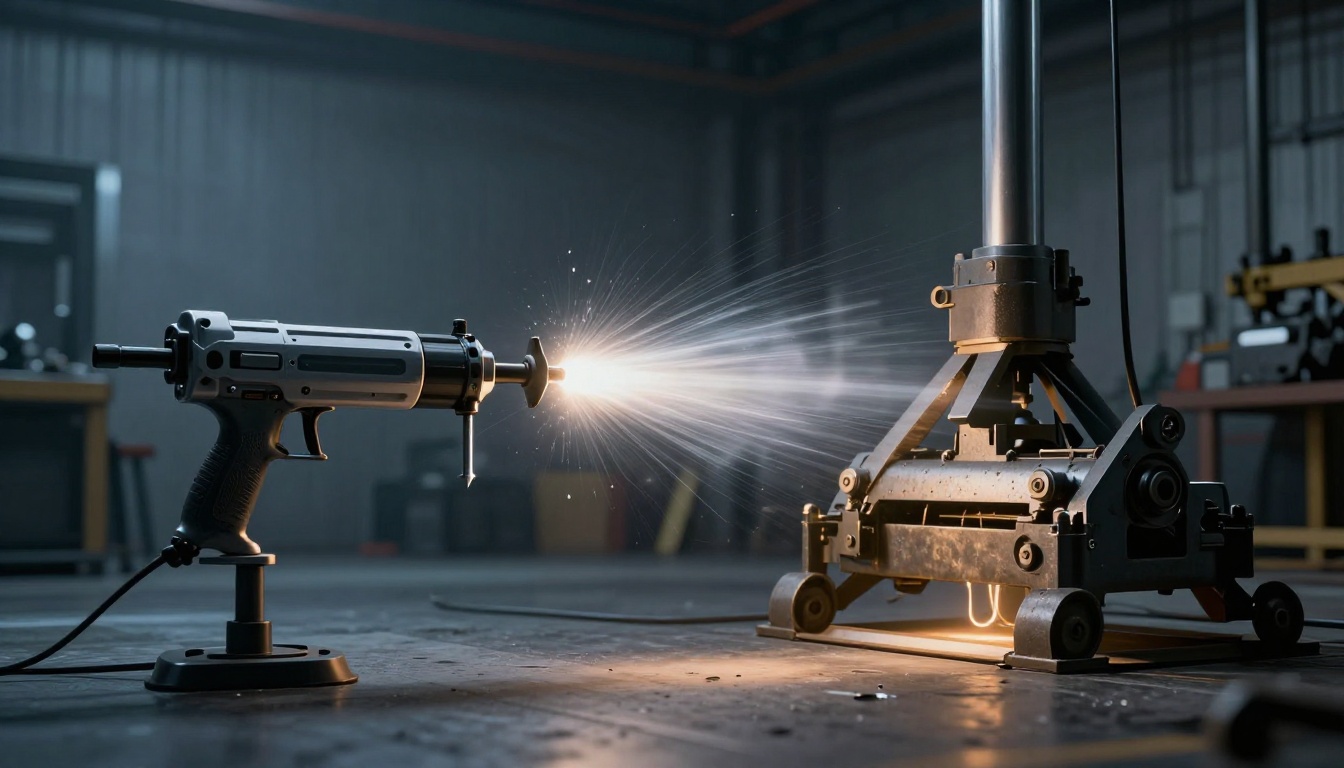
A pneumatic nail gun can fire nails in a blink. A hydraulic jack can lift a car, but it takes its time. So why do pneumatics feel like speedy sprinters, while they fall short when you need raw muscle?
Pneumatic systems use compressed air to move a piston fast. Hydraulics use oil under pressure, and electrics use motors and controls. Each power source has a different “feel,” and the physics behind that difference shows up fast on the job.
Here’s the twist: pneumatics can reach very high travel speeds (often up to about 100 inches per second in fast air cycles), while hydraulics commonly land around 4 to 20 inches per second for many actuator tasks. Pneumatics win on speed and cycle time. They lose when you try to push with the same force.
In the sections below, you’ll see the simple reasons behind that trade-off, with practical comparisons, pros and cons, and real-world uses. Then we’ll wrap up with what’s improving in pneumatics in 2026, including hybrid approaches that try to keep speed without giving up too much power.
What Gives Pneumatic Systems Their Blazing Speed?
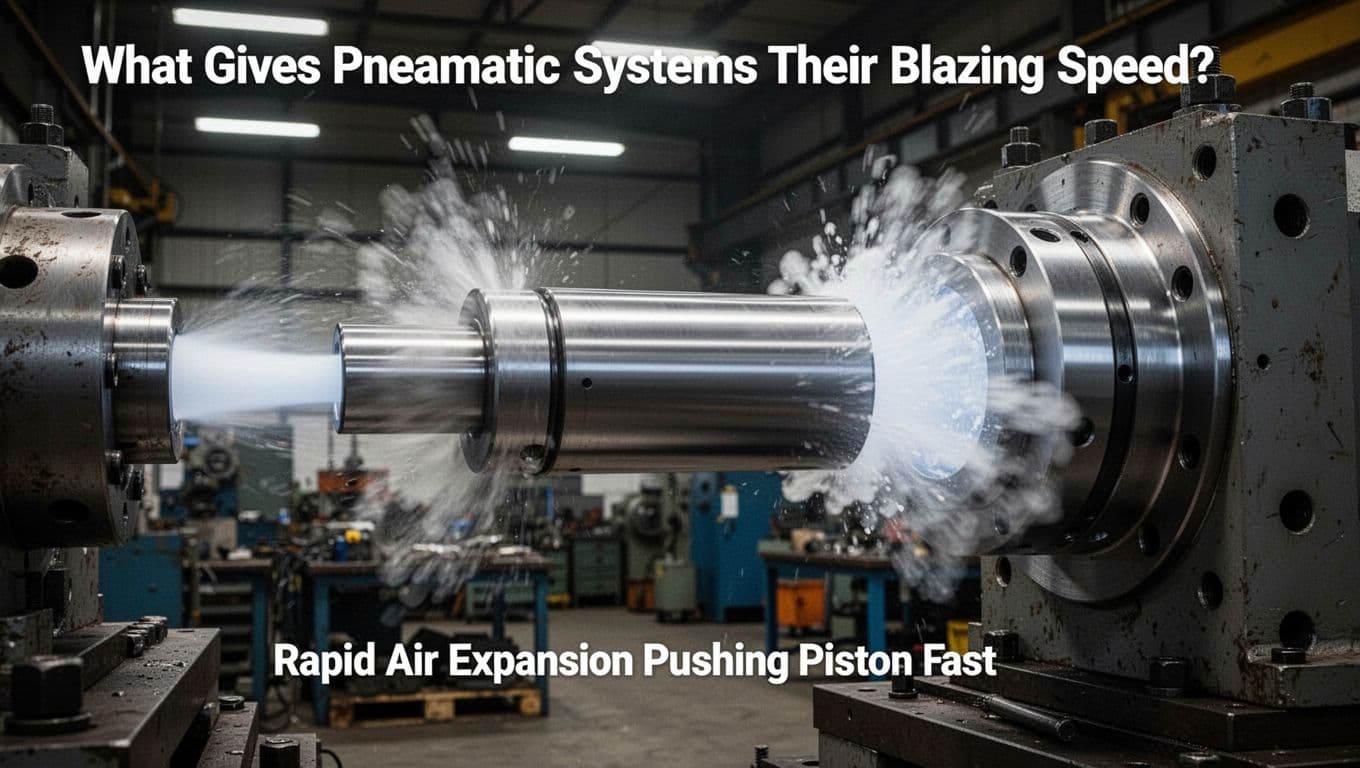
Pneumatics are fast because gases respond quickly to pressure changes. When you release compressed air, the gas expands fast and pushes the piston forward. It’s like a balloon snapping open. The motion starts quickly, and the piston can travel with little delay.
In hydraulics, you also use pressure, but the “working fluid” is oil. Oil is much less compressible than air. That helps with force, but it can also change how motion ramps up during fast cycles.
Another big factor is how air moves. Air can travel through tubes and valves quickly, so the system can switch from “stored pressure” to “motion” fast. Meanwhile, the oil path often needs more careful control to avoid pressure spikes and heat.
Here’s a quick comparison of typical top motion speeds people target in automation:
| Actuator type | Typical speed range (in/s) | What it’s known for |
|---|---|---|
| Pneumatic | 20 to 50+ (fast cycles can feel near 100) | quick start, short strokes |
| Hydraulic | 4 to 20 (often higher in some systems) | strong push, steady motion |
| Electric | 5 to 20 | precise positioning |
If you want a grounded comparison of what each system is best at, see Hydraulic Vs. Pneumatic Power from Triad Technologies.
The Role of Air Compressibility in Quick Action
Air compressibility sounds like a drawback, but it also helps pneumatics move fast. Think of pressure storage like a spring. The system “stores” energy in the compressed air. Then, when a valve opens, the air expands and releases that energy quickly.
Also, air molecules move freely. So when pressure drops, they spread out fast. That rapid expansion can translate into quick piston movement, especially in shorter strokes.
Hydraulic oil behaves differently. Because oil is much harder to compress, it transfers pressure through the system more directly. That’s excellent for force and control. However, the motion ramp can feel less “instant” when you compare cycle start to cycle start.
Real Speed Numbers That Prove the Point
Speed is where pneumatics shine, so it helps to look at plain ranges. Across many industrial setups:
- Pneumatics: roughly 20 to 50+ in/s, with certain fast actions reaching close to 100 in/s
- Hydraulics: roughly 4 to 20 in/s in many motion jobs
- Electrics: roughly 5 to 20 in/s, usually with smooth ramping
These numbers matter because factories don’t just care about peak force. They care about cycle time. If you can repeat a motion faster, you can often boost throughput without redesigning the whole line.
If you’re sizing pneumatics for speed, it also helps to look at real actuator options. For an example of pneumatic linear actuator designs, check Pneumatic linear actuators from ATI Actuators.
The Downside: Why Pneumatics Struggle with Raw Power
Here’s the trade you feel in your hands. Pneumatics can blast quickly, but they can’t always hold back the load. The main reason is simple: air compresses. That means some of the pressure energy turns into “air squish,” not pure pushing force.
Hydraulics use oil, and oil is close to incompressible for practical purposes. So more of the pressure becomes direct force on the piston. In short: pneumatics waste some push inside the air itself.
Another way to see it is with everyday objects. Squeezing a sponge changes shape and absorbs energy. Pushing a solid rod transfers force straight into the load. Pneumatic systems are more like the sponge when resistance rises.
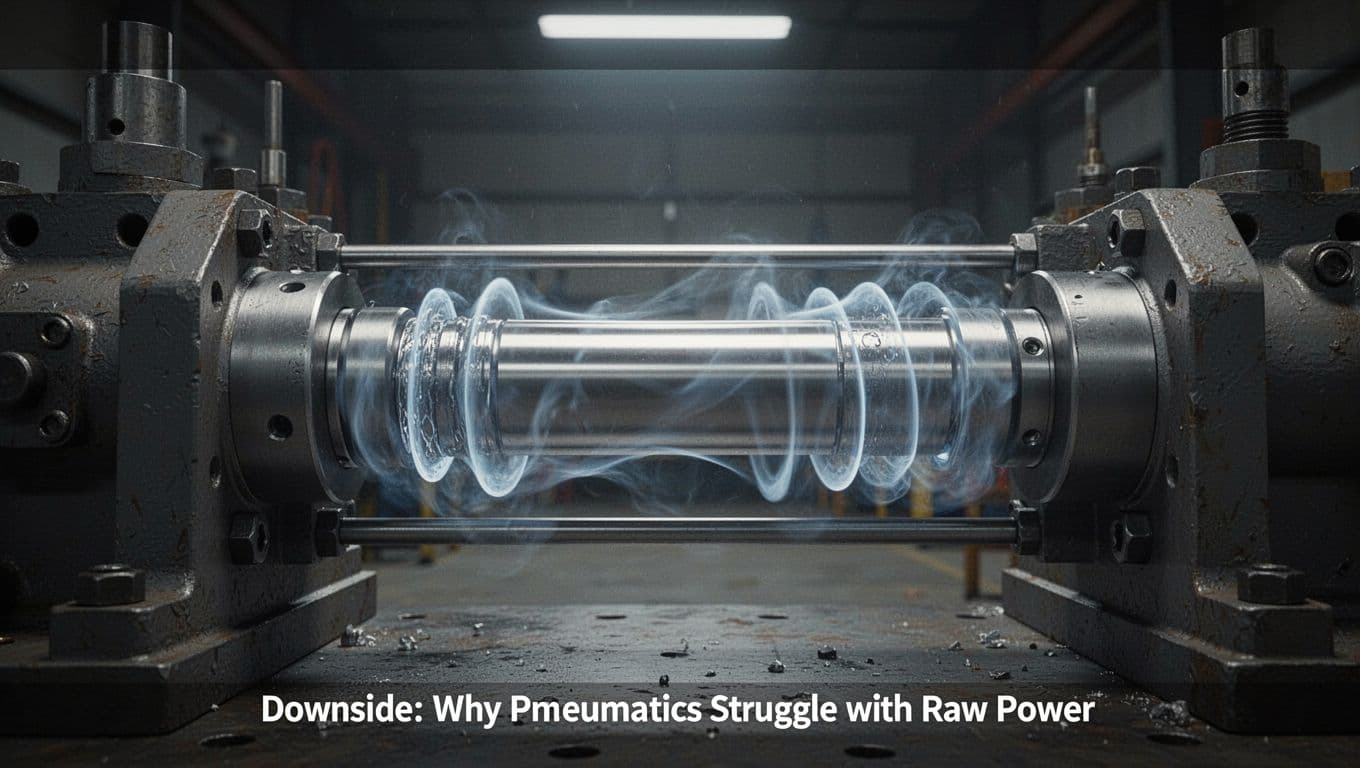
Bottom line: Pneumatics can start fast, but compressibility limits how much force you get at the same pressure.
How Compressibility Steals Strength
When the piston hits a higher load, the trapped air compresses more. That cushioning effect slows the buildup of force. The piston may move, but the system struggles to “hold” the load the way hydraulics can.
This is also why pneumatics often need larger cylinders for heavier tasks. Bigger cylinder area can raise force, but it costs space and can hurt your cycle speed if you over-size.
So the system ends up optimized for light work: clamping, pushing, sorting, and quick motion with manageable resistance.
Force Output Showdown with Hard Numbers
Because exact force depends on piston area, pressure rating, and friction, no single number fits every setup. Still, the direction is consistent:
- Pneumatics often use 80 to 100 psi supply pressure for many applications.
- Hydraulics often operate with hundreds to several thousand psi for heavy-duty push.
Here’s a simplified “at a glance” comparison of what that means for force capacity:
| Actuator type | Common pressure region | Force feel |
|---|---|---|
| Pneumatic | ~80 to 100 psi | lower peak force, better for light loads |
| Hydraulic | ~1,000 to 3,000+ psi | very high force, built for heavy loads |
| Electric | depends on motor gearing | strong when designed for torque |
The key idea isn’t the exact pressure value. It’s that hydraulics can push with far higher effective pressure at the piston.
Pneumatics Versus Hydraulics and Electrics: A Fair Fight
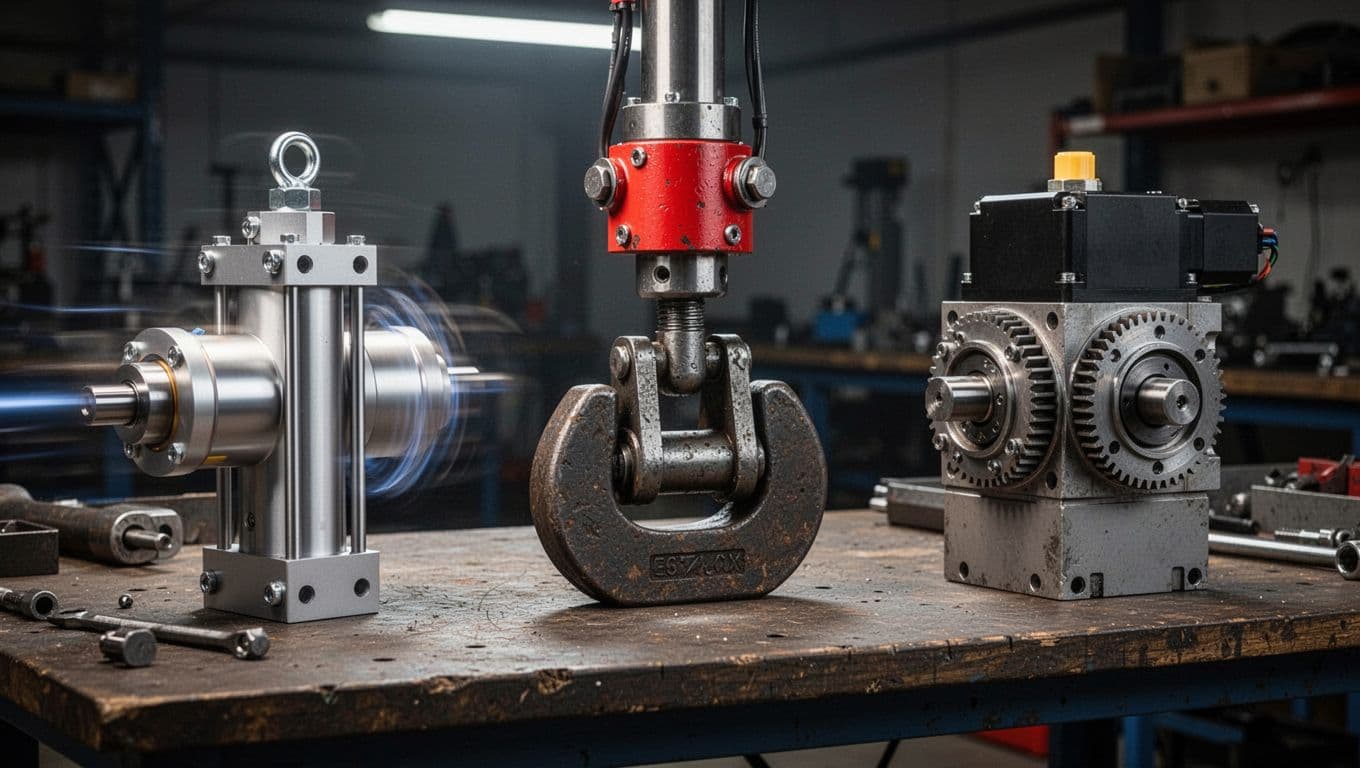
A fair comparison means looking at speed, force, precision, and efficiency together. Pneumatics typically win on speed and simple parts. Hydraulics win on force. Electrics often win on precision and control.
Also, each system has a “best place” in an assembly line. Pneumatics fit tasks that repeat fast. Hydraulics fit tasks that must push hard. Electrics fit tasks that must stop exactly where you say.
Quick Comparison Table for Easy Scanning
Use this table as a decision shortcut:
| Characteristic | Pneumatic | Hydraulic | Electric |
|---|---|---|---|
| Speed | Fast cycles | Medium | Medium, smooth |
| Force capacity | Lower | Highest | High (torque-based) |
| Precision (positioning) | Lower (often ~0.1 inch class) | Good | Very high (often ~0.001 inch class) |
| Typical efficiency | ~75 to 80% | ~40 to 55% | Often best overall in many setups |
| Maintenance vibe | Simple, but leaks happen | More complexity | Less fluid handling |
For a practical “which one fits your setup” read, Hydraulic vs. Pneumatic Systems from Magnum Industrial is a helpful overview.
Pros, Cons, and Where Pneumatics Shine in Real Life
Pneumatics are hard to beat when your job needs fast repeating motion. They’re usually cheaper to start, easier to install, and safe for many light tasks because air is less messy than oil.
Still, pneumatics come with real limits. You often trade force and fine control for speed.
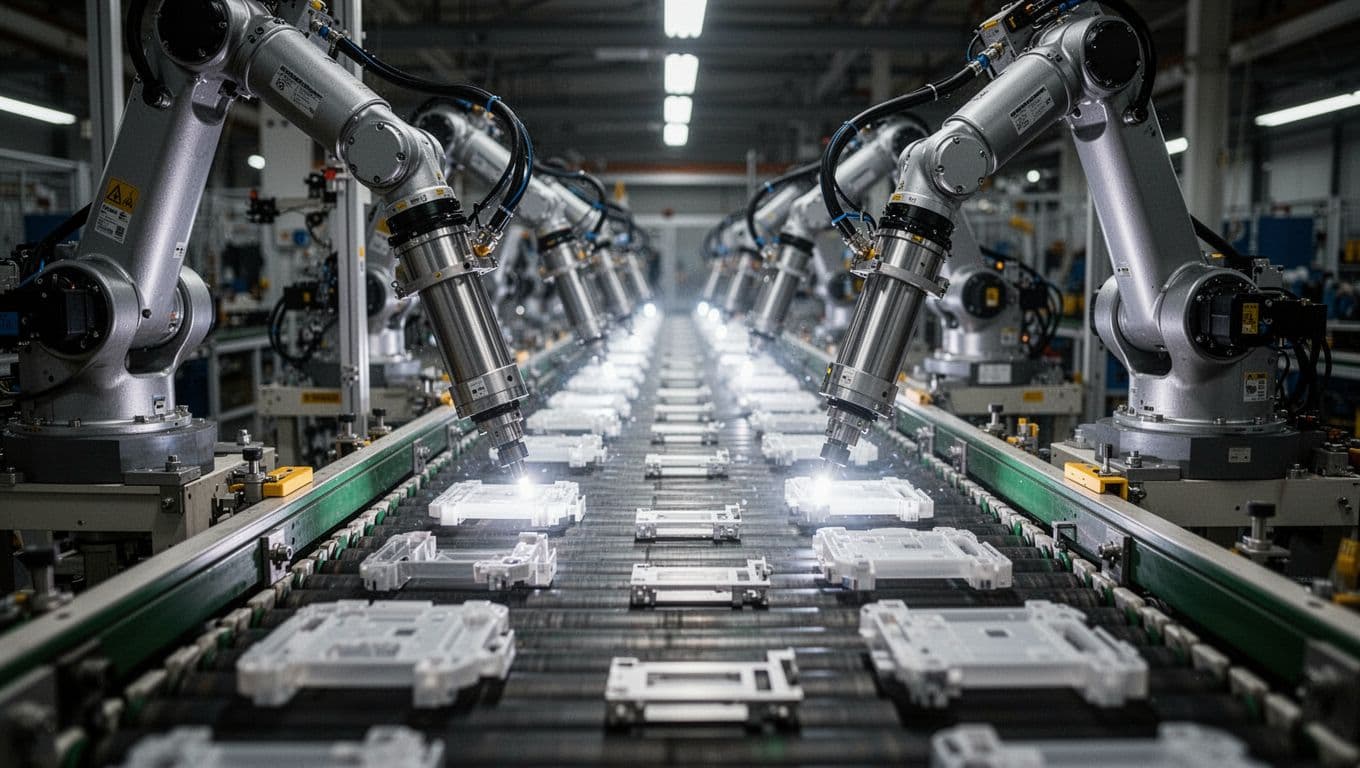
Pneumatics are great for:
- Fast cycle time in repetitive tasks
- Simple hardware (cylinders, valves, regulators)
- Safer setups for lighter loads
Pneumatics can be tough for:
- Higher force demands
- Tight positioning (air compressibility affects repeatability)
- Air leaks that quietly cost performance
Everyday Jobs Perfect for Pneumatic Speed
Look for pneumatics where you need quick taps, pushes, and clamps. For example:
- Assembly-line pushers and spacers
- Nail guns and staplers (light material, fast action)
- Packaging and case closures with short strokes
- Air-powered pick-and-place for small parts
In these cases, pneumatics often beat slower systems on throughput. You get motion now, not later.
When to Skip Pneumatics for More Muscle
If your load is heavy or you need stable force, that’s a clue. Pneumatics often struggle when you need long pushes, presses, or consistent high clamping force.
In those situations, hydraulics usually make more sense. If you also need tight stops, electrics often win.
Fresh Advances Making Pneumatics Even Better by 2026
Pneumatics in 2026 look smarter than older generations. Hybrid designs show up more often, combining pneumatic speed with electric motion for better control. Some systems also cut air use by matching airflow to the job, instead of blasting full pressure all the time.
There’s also more “monitoring” inside pneumatics. Sensors can track air pressure, cycle counts, and performance. That helps teams plan maintenance instead of reacting to failures.
On the engineering side, digital testing improves faster. Engineers use simulations to study airflow and motion before building hardware. For a 2026-focused look at advanced pneumatics, see Optimizing Manufacturing Through Advanced Pneumatics: A 2026 Guide.
Conclusion
Pneumatics are faster because compressed air expands quickly and starts pushing almost right away. That speed helps in short, repetitive tasks like clamping and part handling.
They feel less powerful because air compresses under load, so not all pressure turns into steady push. Hydraulics, with oil, can deliver far more force. Electrics can add top precision when you need tight positioning.
If your goal is speed with light to medium loads, pneumatics fit. If your goal is heavy lift or high holding force, choose hydraulics. If your goal is precise stopping, electric systems often win.
What kind of job are you working on right now, and do you need faster cycles or stronger push?